
How Many Restrooms Does a Race Route Need?
Start with the field size, then split it between the start line, mid-course water stops, and the finish chute. A field of 2,000 runners spread across a course usually calls for banks of 6 to 10 standard portable toilets at the start, smaller clusters of 2 to 3 at each aid station, and a heavier bank at the finish where people linger. OSHA 1926.51(c) sets construction-site toilet ratios, and while a race isn't a job site, we use the same logic organizers already trust: more units where people stand still longest. Course marshals and volunteer crews need coverage too, so don't count only the runners. If the event includes a wheelchair division or adaptive athletes, at least one accessible unit per cluster should meet ADA accessible porta potty specs, consistent with ADA Standards 213.2, which calls for 5 percent of clustered single-user units to be accessible, never fewer than one. We size this out for you during a quote request once we know your route map and expected turnout. For marathons that also draw spectators along the course, check our event restroom rental page for how family viewing areas change the count. Races in De Witt, 4.6 miles east of Syracuse, or Onondaga, 6.9 miles southwest, often route through both jurisdictions, so plan restroom zones around where the crowd actually gathers, not just mile markers.
Where Should Units Go Along the Course?
Placement drives everything. Units belong on firm, level ground with a clear path in, following the same stability principle in ADA Standards 302.1, which requires surfaces be stable, firm and slip resistant. That matters most at Syracuse aid stations set up on grass or gravel shoulders after a wet spring. Our porta potty placement guide covers ground prep in more depth. Keep units out of the runners' lane and off the timing mat sightlines, but close enough that a walk-up doesn't cost someone a minute. At the finish, cluster units away from the chute exit so finishers don't bottleneck near medical tents. If your race uses a light tower or generator near the finish for evening events, remember cords and cable runs need their own clearance; knowing how to brace a temporary power pole matters here too: a temporary power pole should be staked or guyed against wind load and set back from foot traffic, the same way you'd stabilize a light tower rental unit on soft turf. Races that run past dusk, like a fall half-marathon finishing near dark, lean on that lighting to keep restroom paths visible. For larger events needing real plumbing rather than banks of standard units, an 8 stall restroom trailer or 4 stall restroom trailer at the finish line handles bigger crowds without the wait, and a luxury restroom trailer works well for VIP or sponsor tents. Syracuse events near De Witt or Salina, 6.4 miles north, sometimes stage finish lines on paved lots, which makes trailer leveling and delivery far simpler than turf.
When Should Units Be Delivered and Serviced?
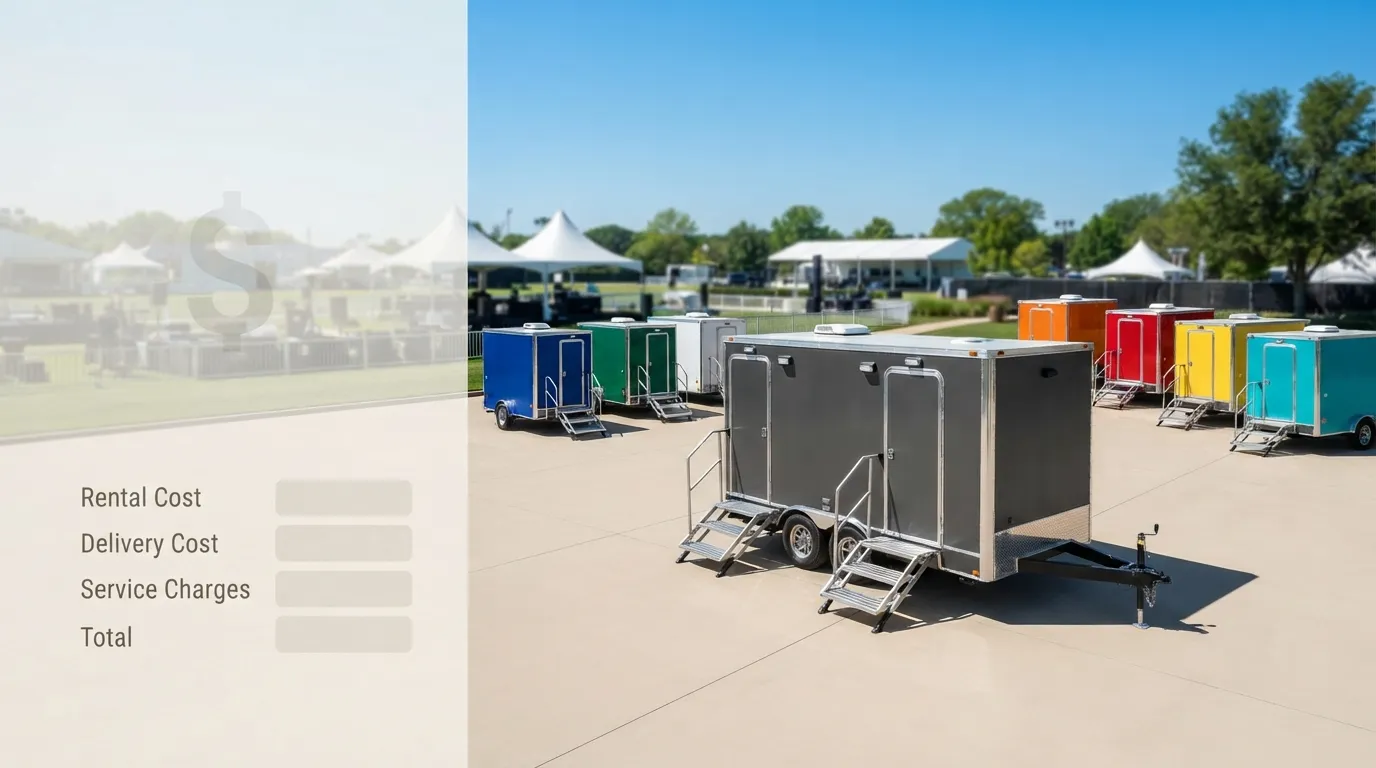
Delivery should land the afternoon before race day, giving crews time to walk the course and adjust placement before runners arrive. ANSI/PSAI Z4.3 sets a baseline service interval of once weekly for up to 10 users over a 40-hour week, but a race compresses thousands of uses into a few hours, so we service and restock units the morning of the event, not days ahead. A standard unit's 60 to 70 gallon holding tank handles steady weekend traffic, but a marathon with several thousand entrants needs extra units rather than extra tank capacity, since the crowd concentrates in short bursts. Weekend event rates for standard units run in line with typical race-day pricing; a one-day or weekend rental fits most single-day marathons better than a weekly rate meant for construction sites. Handwashing matters too. 29 CFR 1910.141(d)(2) requires soap and towels or a hand-drying device at washing facilities, not just sanitizer, so pair restroom banks with handwashing station rental or a portable sink rental near food and medical tents. Pickup usually happens the same evening or the next morning, once the course reopens to traffic. For race organizers scaling this across a series, our construction site services team applies the same delivery logic to job sites, and our service areas page covers how far we run routes from Syracuse, including into Cicero, 14.2 miles northeast.
| unit | duration | low | typical | high |
|---|---|---|---|---|
| standard | weekend | 125 | 250 | 400 |
| standard | event | 200 | 400 | 800 |
| ada | weekend | 199 | 240 | 300 |
| trailer | event | 2499 | 3500 | 3899 |
How far in advance should I book restrooms for a race?
Book 3 to 4 weeks out for a mid-size marathon, longer for a spring race when demand peaks. Popular Syracuse race weekends fill delivery slots fast. Confirm your headcount early through request a quote so we can size the bank correctly.
Do I need a permit for restrooms placed on public roads?
Placement in the public right of way needs confirming with the city; check with Syracuse before finalizing course-side locations. Our porta potty permit requirements page walks through what to ask.
Can we get accessible units at the finish line?
Yes. ADA Standards 213.2 requires at least one accessible unit per cluster, and ADA Standards 404.2.3 sets a 32 inch minimum clear door opening. See ADA restroom requirements for full specs.
What happens if a race runs long and units need mid-day service?
We can schedule a mid-event service pass for large fields. Standard tanks hold 60 to 70 gallons, which covers most single-day races without a refresh, but ultra-distance events sometimes need one.
Should we brace power poles near the finish line setup?
Yes. A temporary power pole near lighting or timing equipment should be staked or guyed against wind, same as a light tower, especially on open finish-line lots. Ask us during setup planning.
Next step
Get a delivery date
Tell us the address, the dates and the headcount. We size the order and confirm the route.