
How Often Does a Septic Tank Need Cleaning?
The honest answer is: it depends on the tank and the household. A standard residential tank runs on a 3 to 5 year cycle, driven by tank size and how many people are flushing daily. A bigger family or a smaller tank pushes you toward the 3 year end. A couple in a big house on a big tank might stretch closer to 5. If you are not sure which end you're on, that is a fair question to ask when you book, and it beats guessing. Waiting too long backs solids into the drain field, and that repair costs a lot more than a pump-out ever will. If you're weighing tank service against other options, our septic pumping service page breaks down what a routine visit covers, and septic tank warning signs covers what tells you it's overdue before the 3 to 5 year mark even arrives. For Syracuse properties without a tank at all, a holding tank rental is worth a look.
What Affects Septic Tank Cleaning Frequency?
Household size is the biggest lever. More people means more water and more solids going in every week, which shortens the interval. Tank size matters just as much: a 1,000 gallon tank serving six people empties faster than the same tank serving two. Water usage habits count too. Long showers, garbage disposals and laundry all add load. Commercial kitchens near Syracuse deal with a separate clock entirely: a grease interceptor fills based on fats, oils, grease and solids hitting that 25 percent depth mark, not a calendar date, so it needs checking on its own schedule. Our grease trap pumping page covers that side. For homes, how often to pump a septic tank style questions usually come back to the same three variables: people, gallons, and habits. If your property runs both a house tank and a grease interceptor, plan for two different maintenance clocks, not one.
Why Does Pumping Schedule Matter for Syracuse Homeowners?
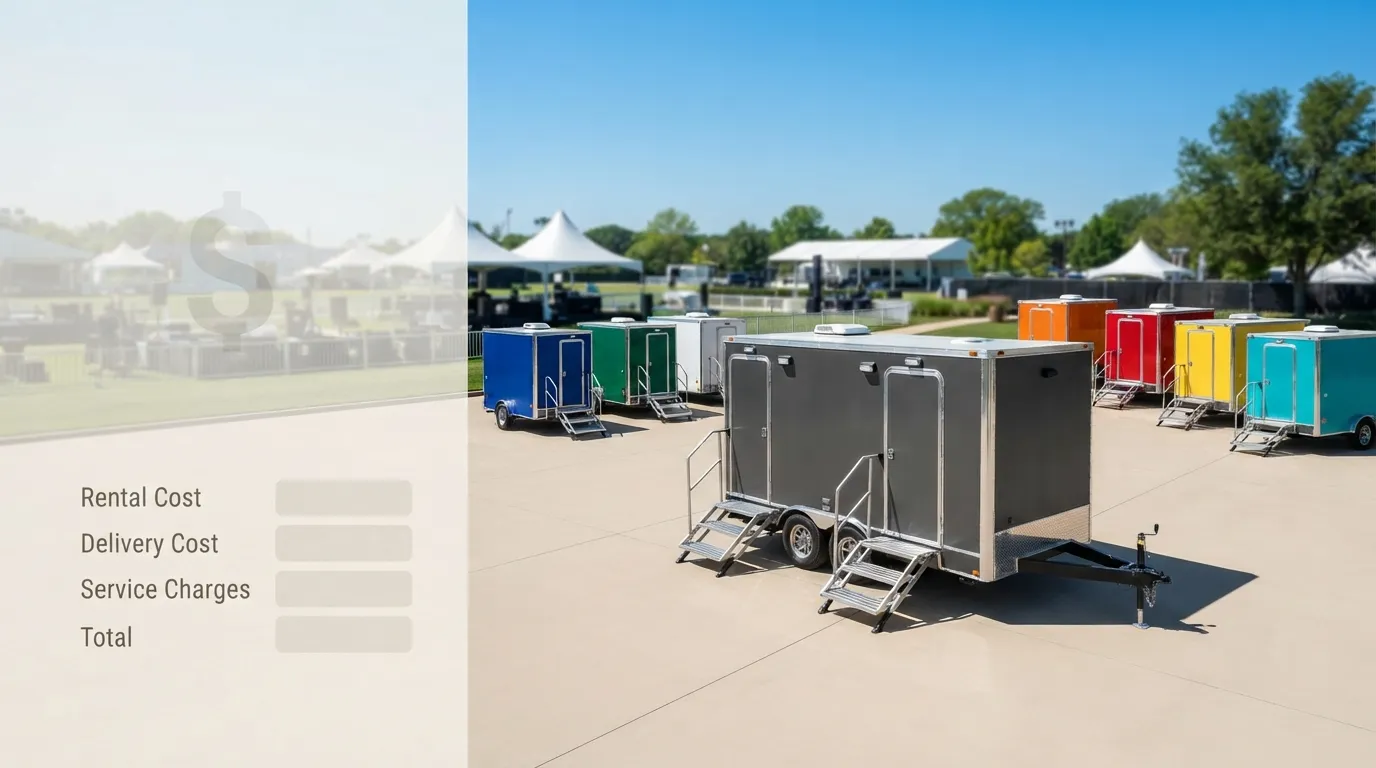
Skip a pump-out and solids that should stay in the tank start moving into the drain field. Once that happens, you're not looking at a routine service call anymore, you're looking at field replacement, which runs far past what pumping costs. Syracuse's freeze-thaw winters add another wrinkle: a tank that's already near capacity going into a hard freeze is a bad combination, and our porta potty in winter page touches on how cold snaps complicate service scheduling generally. Staying ahead of the 3 to 5 year window is cheaper than catching up after a backup. If you're mid-renovation and don't want to lean on an indoor bathroom that's tied to a tank near its limit, a home renovation porta potty takes the pressure off while you sort out service timing. Same logic applies to a property going through disaster relief sanitation work, where the septic system is often the last thing anyone checked.

Should Syracuse Businesses Follow a Different Schedule?
Yes, and it's not close. A restaurant or commercial kitchen isn't watching a calendar, it's watching grease depth, and OSHA's general sanitation framework under 1926.51(c) is built around worker counts, not septic cycles, so don't try to map one onto the other. Construction sites near Syracuse have their own toilet ratio requirements: 1926.51(c)(1) calls for one facility per 20 workers on crews of 20 or fewer, scaling up from there. That's a separate conversation from septic pumping, but property managers often ask about both in the same call. If you're running a jobsite with a septic tie-in and a crew that needs restrooms, our construction site services page and the OSHA portable toilet requirements guide cover the worker-facing side. Event venues get the same split: event restroom rental covers guest counts, while a property's actual septic tank still runs on its own 3 to 5 year clock underneath. Farms near Syracuse dealing with hand-labor crews should also check farm and agricultural restrooms, since field sanitation rules there are distinct from residential septic timing.
Homes across De Witt, 4.6 miles east of Syracuse, and Onondaga, 6.9 miles southwest, tend to call in around the same 3 to 5 year window, since housing stock and tank sizes are similar across the county. If you're closer to Cicero, 14.2 miles northeast, or Clay, 16.5 miles north, scheduling ahead matters more since routing takes longer. Check septic tank cleaning and septic tank pumping cost for what a visit actually involves and runs.
How do I know if my tank is overdue?
Slow drains, gurgling pipes, standing water near the tank lid, or a sewage smell in the yard are the usual signs. Any one of those means don't wait for the calendar. Check septic tank warning signs for the fuller list before it turns into a backup.
Does household size really change the interval that much?
Yes. A large family on a small tank can push toward pumping every 3 years, while a couple on a large tank might stretch closer to 5. Water usage and garbage disposal habits shift it further either direction.
Is a grease interceptor on the same 3 to 5 year schedule?
No. A grease interceptor gets pumped once fats, oils, grease and solids reach 25 percent of the liquid depth, which can happen far faster than a residential septic cycle. See grease trap pumping for that timeline.
What happens if I skip a pump-out past 5 years?
Solids overflow into the drain field, and that's a repair, not a service call. Costs jump well past routine pumping. Catching it at year 3 to 5 is cheaper every time.
Can Syracuse Porta Pros handle both septic pumping and a portable toilet during the work?
Yes. If the crew's working near the tank access point, a temporary unit keeps the bathroom usable. Check portable toilet rental or request a quote to line both up together.
Next step
Get a delivery date
Tell us the address, the dates and the headcount. We size the order and confirm the route.