How fast can emergency sanitation reach a Syracuse address?
Speed depends on where you are and what's already on the road. Syracuse Porta Pros treats storm response like emergency porta potty rental work: units get pulled from standing stock first, not built to order. If De Witt, 4.6 miles east, or Salina, 6.4 miles north, both need units the same afternoon, the closer job doesn't automatically win. Routing gets planned around road closures and generator-powered pump trucks, which matters when a septic pumping service call comes in at the same time as a toilet delivery.
A standard unit rents by the day in the $100 to $350 range, and that's often the right call during a short outage rather than committing to a week. For a shelter or command post that might run several days, a porta potty rental per day comparison against a weekly rate helps decide which makes sense. Crews also carry handwashing station rental units, since a shelter kitchen or triage tent needs more than a toilet. OSHA 1926.51(a)(1) requires an adequate supply of potable water at any place of employment, and that standard doesn't pause because the grid is down.
What happens if a septic system fails during a flood?
A failed septic system during a flood event needs a holding tank or pump-out fast, not a permit fight. Syracuse Porta Pros runs emergency septic service calls alongside sanitation deliveries, because a backed-up tank next to standing floodwater is a health hazard, not a maintenance item. A residential tank is typically pumped every 3 to 5 years under normal conditions, but flood infiltration can force an off-cycle pump-out with no warning. Where a home can't use its own system at all, a holding tank rental covers the gap until repairs happen.
Restaurants and shelters running temporary kitchens generate grease loads fast, and a grease trap pumping call gets scheduled once fats, oils, grease and solids hit 25 percent of the liquid depth in the interceptor. That threshold doesn't move just because the situation is an emergency. Crews working a flood response in Syracuse also watch for septic tank warning signs at neighboring properties, since one saturated leach field usually isn't isolated. If pumping alone doesn't fix it, a full septic tank cleaning may be the next step before the system goes back into service.
Are accessible units available for shelters and relief sites?
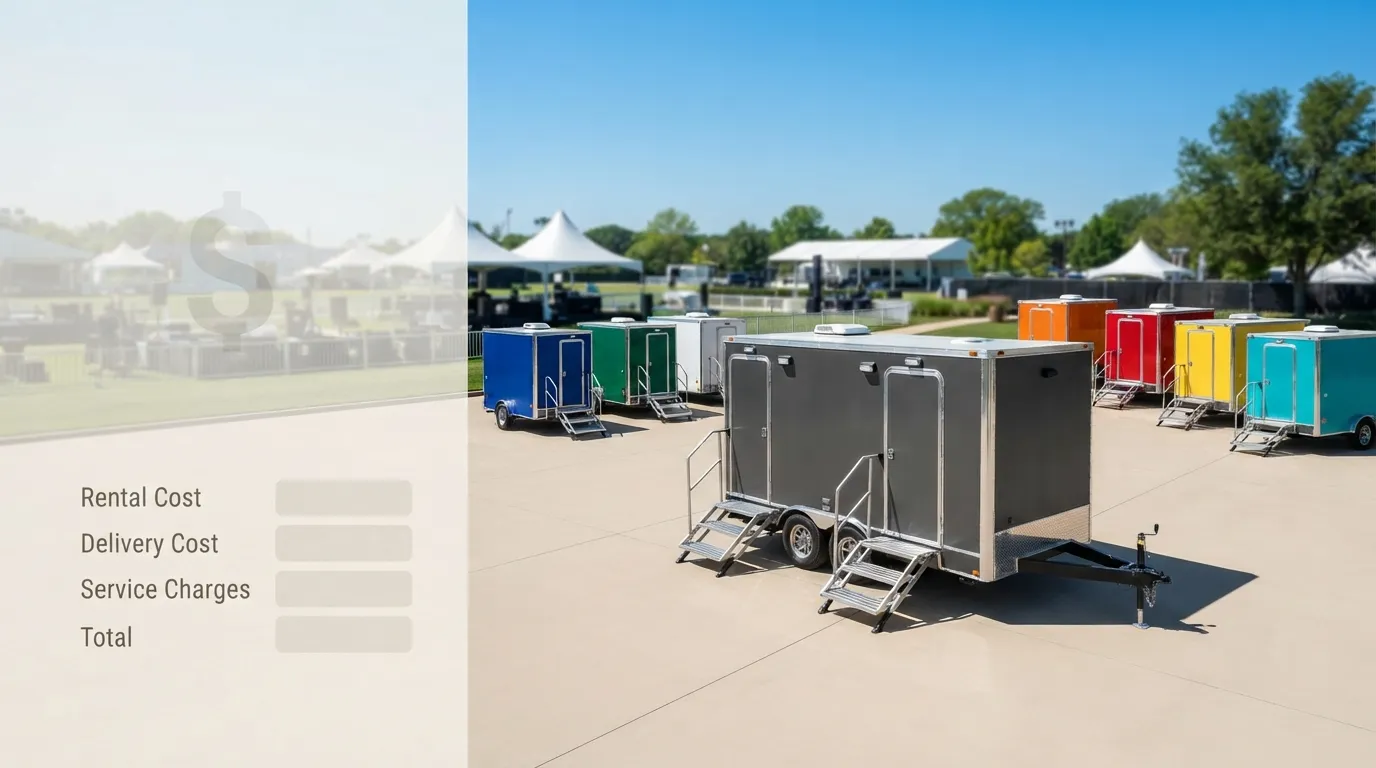
Yes, accessible units are part of the standing disaster stock, not a special order. ADA Standards section 213.2 requires that where single-user portable units are clustered, at least 5 percent, and never fewer than one, be accessible, and that rule doesn't relax at a shelter site. An ADA accessible porta potty rents in the $200 to $400 range per day, and the unit has to clear ADA Standards 404.2.3, a 32 inch minimum door opening, plus a 60 inch turning circle under section 304.3.1.
Shelter operators in Syracuse planning for displaced households should size the order the way any large gathering would, using how many porta potties do i need as a starting point, then layering in accessible units on top of that count. OSHA 1926.51(c) sets the baseline ratio for larger crews at one toilet facility per 20 workers, and relief camps with paid responders or contractors on site fall under that same standard. Ground stability matters too. ADA Standards 302.1 calls for firm, slip-resistant surfaces, which is harder to guarantee on saturated flood ground, so placement gets checked before units go down, not after. A porta potty placement guide covers the ground and clearance questions that come up on a normal job, and most of it still applies during a flood response, just with tighter timelines.
How much does emergency sanitation cost during a disaster?
Pricing follows the same bands as any rental: a standard unit runs $100 to $350 a day, and delivery adds $100 to $500 depending on distance and rush timing. There's no separate disaster surcharge built in. A full porta potty rental cost breakdown shows how day, week and month rates compare.
Can a shelter get handwashing stations without a toilet order?
Yes, handwashing stations rent on their own. 29 CFR 1910.141(d)(2) requires soap and towels or a hand-drying device, since hand sanitizer alone doesn't satisfy that standard. A portable sink rental works for kitchens; a hand sanitizer station rental supplements but doesn't replace it.
Do responders need special permits for emergency placement?
Permit rules for right-of-way or municipal land placement need confirming with the City of Syracuse directly; that detail isn't settled in advance for every address. Check porta potty permit requirements before placing units on public property, even during an active response.
What if the disaster site has no power for a restroom trailer?
A restroom trailer can still run without utility power if the site plan accounts for it. A temporary power pole or a light tower rental covers electrical needs at a staging area or shelter perimeter.
How long can emergency units stay on site?
As long as the response needs them. Many relief sites start on a daily rate, then shift to monthly porta potty rental pricing once recovery stretches past a few weeks.
Next step
Get a delivery date
Tell us the address, the dates and the headcount. We size the order and confirm the route.