How Do Porta Potties Work Day To Day?
The setup is simpler than people expect. A standard unit sits about 44 by 48 inches on the ground and stands roughly 92 inches tall, with a holding tank underneath the seat. That tank holds a blend of water and deodorizing chemical, sometimes called porta potty chemicals or bathroom chemical packets, that breaks down waste and knocks down smell between services. There's no flush, no water line. When you use it, waste drops straight into the tank and stays there until a service truck empties it. On a busy job site outside Syracuse, a construction worker running to a porta potty during a short break doesn't think about any of this, and that's the point. ANSI/PSAI Z4.3, the portable sanitation service standard, sets a baseline of one visit per week for up to 10 users across a 40 hour week, though busier sites need more frequent stops. Syracuse Porta Pros builds the visit schedule around headcount and hours worked, not a flat calendar. If you're trying to figure out how many units a crew or event actually needs, the porta potty guide for figuring headcount walks through the math, and the standard porta potty rental page covers what comes standard on every unit.
How Do Flushable Porta Potties Work?
A deluxe flushable unit adds a small fresh water tank and a foot pump or hand pump that pushes a measured rinse into the bowl after use, moving waste into a separate holding tank instead of leaving it exposed. It feels closer to a home bathroom. Some also add a sink with its own fresh water supply. That's different from a plain portable sink, which works off a self-contained fresh and gray water system with no toilet function at all. Both types are sealed units, no hookup to city water or sewer required, which matters on sites where hookups don't exist yet. The deluxe flushable porta potty page has the specs, and if you just need hand washing without a full sink, the handwashing station rental page and portable sink rental page both cover standalone options. For ADA-compliant units, ADA Standards section 304.3.1 requires a 60 inch turning circle inside the stall, and section 404.2.3 sets minimum door width at 32 inches. Syracuse Porta Pros stocks ADA units built to that spec. See the ADA accessible porta potty page for full details.
How Do Camping Porta Potties Work?
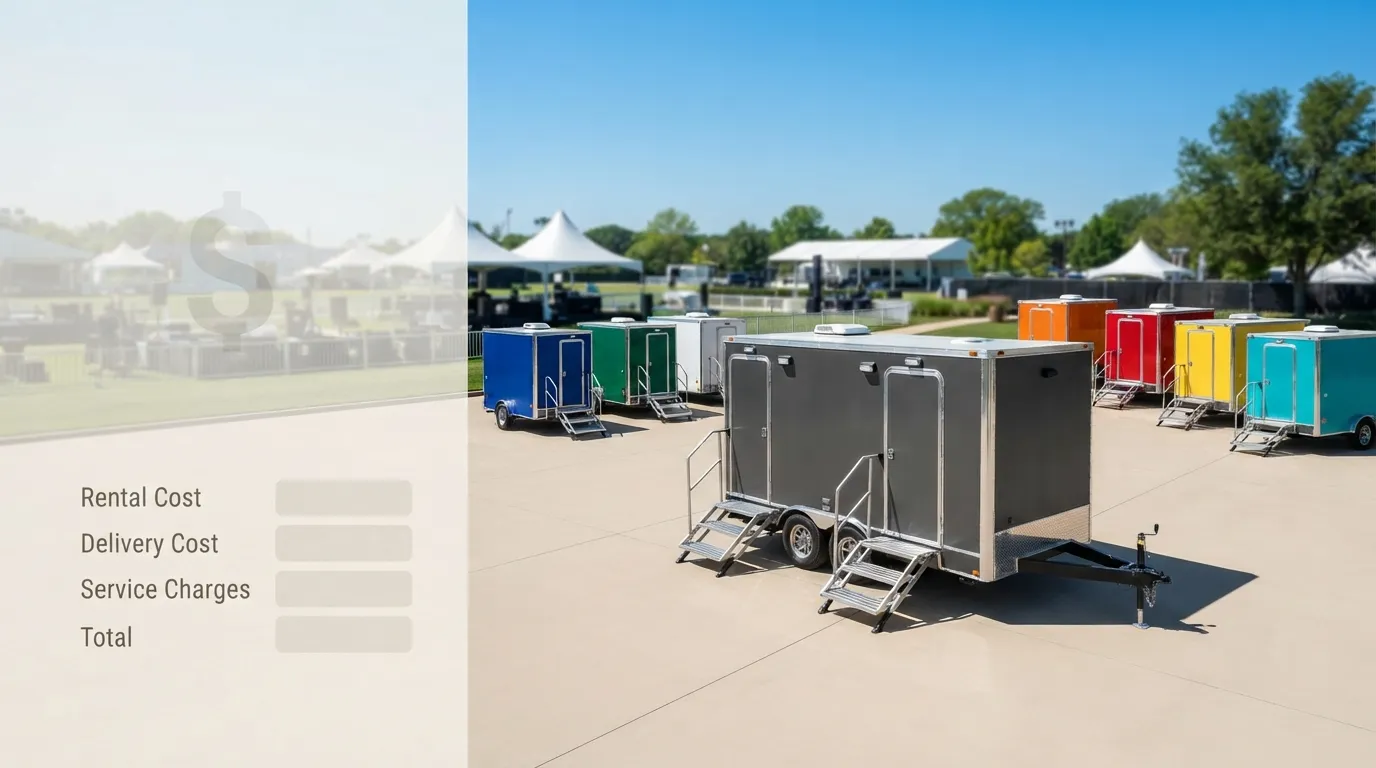
Camping and rural setups run the same core system, tank below, chemical inside, no plumbing, but placement matters more because service trucks need a clear path in. A roll-off delivery needs about 60 feet of straight clearance behind the truck, and portable toilet delivery works on similar access logic. That's worth checking before booking a unit for a wooded site or a farm property outside Syracuse. Farms and agricultural operations have their own rule set: OSHA 1928.110 requires field sanitation for hand-labor employees, one facility per 20 workers, reachable within a quarter mile walk. If you're setting up for harvest crews or a work camp, the farm and agricultural restrooms page covers that standard in more depth. For weekend camping trips or short outdoor stays, a standard unit rented for a couple of days runs a different price than a week-long placement, and the porta potty rental cost page breaks down that range. Homeowners doing a renovation project face a similar question, and the home renovation porta potty page covers short-term placement near a house.

What Chemicals Go In A Porta Potty?
The deodorizing chemical is usually a blue dye, biocide, and fragrance blend designed to break down waste and mask odor between pump-outs, not to sanitize like a septic tank cleaning chemical would. It's a different product from what's used in a home septic system, which typically holds 1,000 gallons and gets pumped every 3 to 5 years depending on tank size and household size, per the fact bank spec on residential tanks. Syracuse Porta Pros handles both sides of this: portable toilet chemical refills for rental units and septic tank cleaning chemical use during pump-outs, though the two service lines run separately. If your question is really about your home system, not a rental unit, the septic pumping service page and how often to pump a septic tank page go deeper on that. Grease traps follow a different threshold entirely: a grease interceptor gets pumped once fats, oils, grease and solids reach 25 percent of liquid depth, covered on the grease trap pumping page. OSHA 1926.51(c) sets the ratio for construction toilets, one unit per 20 workers on a job site, and 29 CFR 1910.141(d)(2) requires soap and towels or a hand-drying device at wash stations, not hand sanitizer alone.
How often do porta potties get serviced?
Most rental agreements include weekly service as a baseline, matching the ANSI/PSAI Z4.3 standard of one visit per week for up to 10 users. High-traffic construction sites or multi-day events usually need twice-weekly or daily service. Syracuse Porta Pros sets the schedule based on worker count and hours, not a fixed calendar. See how often porta potties are cleaned for specifics.
Do porta potties smell bad?
Not when they're serviced on schedule. The chemical mix inside the tank is built to control odor between pump-outs, and proper venting helps too. Smell usually means a unit is overdue for service or overloaded for its headcount. The do porta potties smell page covers what causes odor and how to prevent it.
Can I place a porta potty anywhere on my property?
Placement depends on ground stability, truck access, and sometimes local code. ADA Standards section 302.1 requires stable, firm, slip-resistant ground under accessible units. Check the porta potty placement guide before choosing a spot, and confirm right-of-way placement with the City of Syracuse directly since that rule varies by location.
How much does a porta potty rental cost in Syracuse?
Pricing depends on unit type and rental length. A standard unit typically runs in the $100 to $350 per day range depending on demand, with weekly and monthly rates priced differently. Full pricing tables live on the porta potty rental cost page and monthly porta potty rental page.
Do I need a permit for a porta potty in Syracuse?
That depends on where the unit sits, especially near a sidewalk or street. Placement in the public right of way needs confirming with the city before delivery. The porta potty permit requirements page walks through what to check first.
Next step
Get a delivery date
Tell us the address, the dates and the headcount. We size the order and confirm the route.